
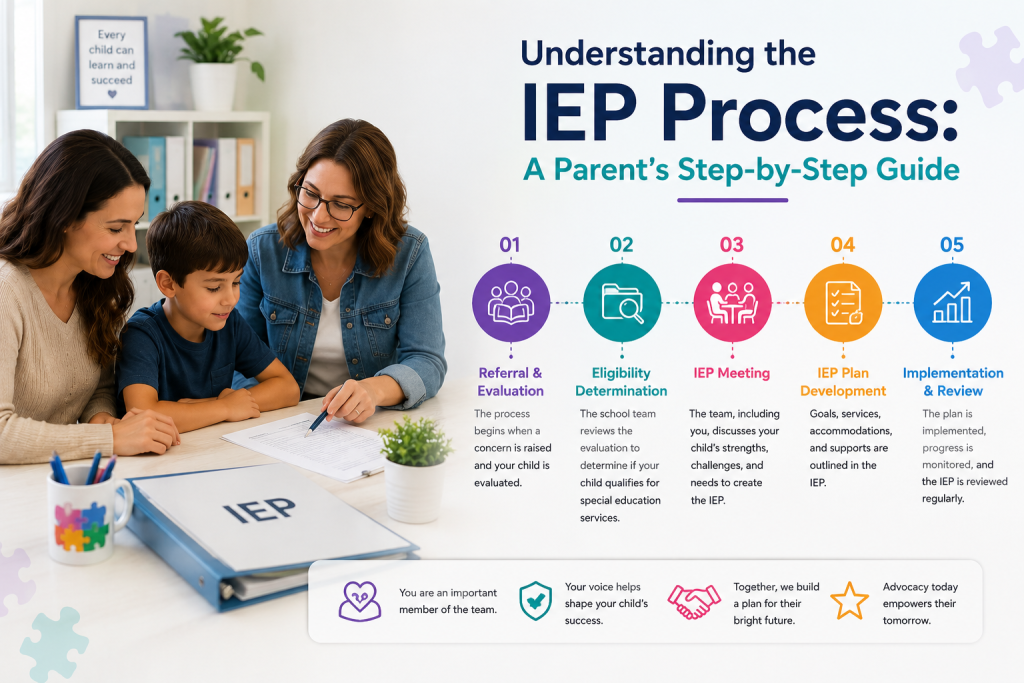
For many parents, hearing the term “Individualized Education Program (IEP)” for the first time can be intimidating. Acronyms, meetings, evaluations, and legal terminology can make the process seem more complicated than it needs to be. The good news is that an IEP is designed to support your child’s success—and understanding how it works can help you become a confident advocate.
What Is an IEP?
An Individualized Education Program (IEP) is a legally binding plan that outlines the educational goals, accommodations, and specialized services a child with a disability will receive in school.
Each IEP is tailored to meet a student’s unique learning needs and is reviewed at least once a year to ensure continued progress.
The Five Key Steps
1. Referral and Evaluation
A student is referred for evaluation when there are concerns about learning, behavior, communication, or development.
2. Eligibility Determination
A team reviews the evaluation results to determine whether the student qualifies for special education services.
3. IEP Meeting
Parents, teachers, specialists, and school representatives work together to develop an individualized education plan.
4. Service Implementation
The school begins providing the agreed-upon accommodations, supports, and specialized instruction.
5. Annual Review
The IEP is reviewed regularly to assess progress and make adjustments based on the student’s evolving needs.
How Parents Can Prepare
Before every IEP meeting:
- Review previous reports.
- Write down your questions.
- Keep examples of your child’s strengths and challenges.
- Remember that your voice matters.
Final Thoughts
An IEP is more than paperwork—it’s a roadmap designed to help your child reach meaningful educational goals. Understanding each step empowers you to collaborate confidently with your child’s educational team.